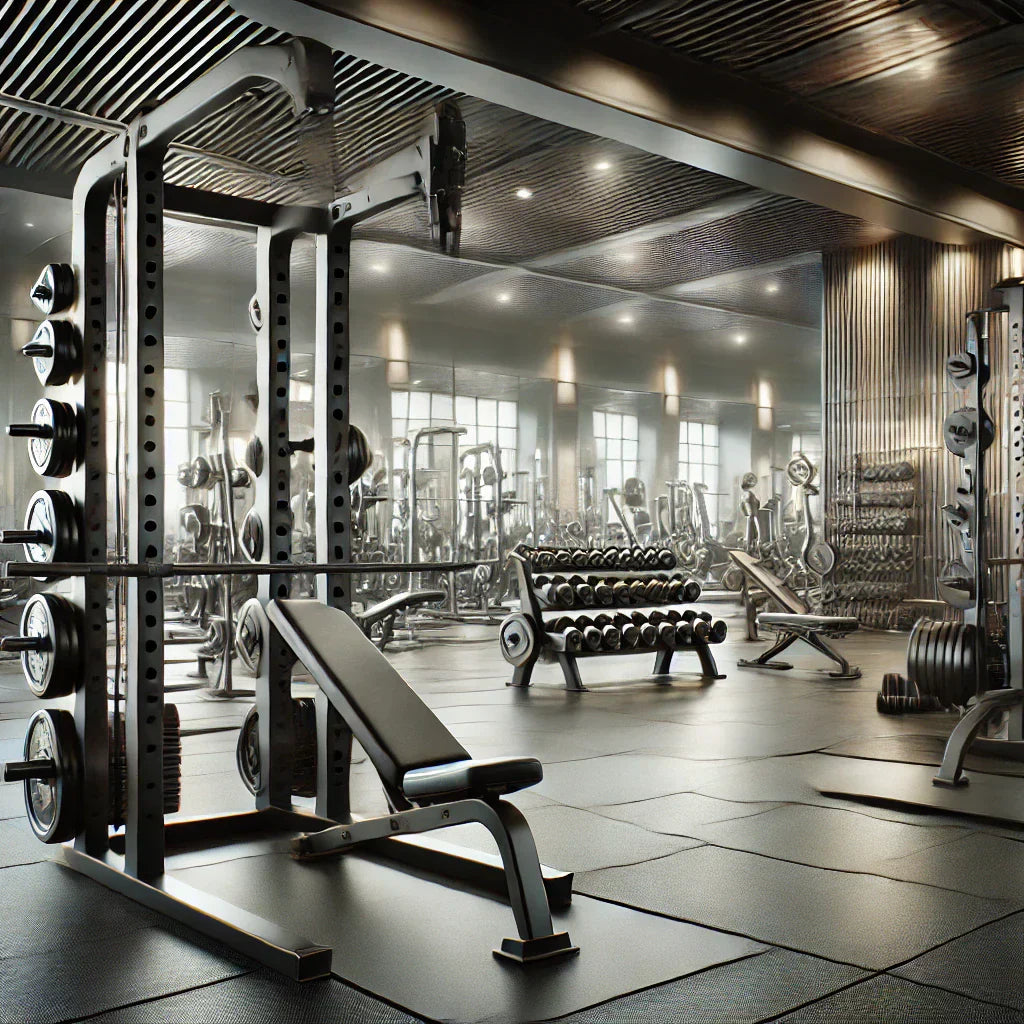




Bench pressing is one of the most popular and effective compound lifts for developing a strong, three-dimensional, and muscular chest. But to get the absolute most out of this mechanical movement and prevent physiological injuries, impeccable biomechanical technique is essential.
In this scientific guide, you will dissect the exact anatomical execution, learn which physiological mistakes damage your adrenal glands and joints, and discover how to optimize neuromuscular pathways for a guaranteed new personal record (PR).
Step 1: The Right Posture (The Physiological Foundation)
A correct starting position is crucial for the stability of your central nervous system, the safety of your joints, and maximum force development.
- Anchor Your Feet Firmly on the Ground: This creates a closed kinetic chain. By driving your feet hard into the floor, you activate the so-called leg drive. This physiological tension transports extra kinetic energy through your legs and core directly to your upper body for maximum stability and upward force.
- Create an Anatomical Arch: Lie on the bench with a slight, controlled hollow in your lower back. Pull your shoulder blades powerfully together and down (retraction and depression) and press them firmly into the bench. This protects the vulnerable rotator cuff and shortens the biomechanical path, putting the chest muscle at a mechanical advantage.
- Keep the Bar Exactly at Eye Level: This guarantees a safe and straight starting position, so you don’t have to press the bar unnecessarily forward or backward when unracking it, preventing shoulder instability.
- Optimize Grip Width: Grip the bar at shoulder width or slightly wider. A wider grip increases the stretch and physiologically places more mechanical tension and emphasis on the musculus pectoralis major (major chest muscle), while a narrower grip significantly activates the musculus triceps brachii.
Step 2: The Right Technique (Mechanical Tension and Contraction)
- Controlled Unracking: Lift the bar steadily out of the rack with straight arms. Keep your wrists perfectly straight and fixed directly under the bar to block destructive bending forces on the wrist joint.
- The Eccentric Phase (Lowering): Lower the bar slowly and under constant tension. Bring the bar along a controlled path to the middle of your chest, just below nipple height (the sternum), to follow the natural biomechanical arc of the movement.
- Fix the Elbow Angle: Keep your elbows at about a 75-degree angle relative to your torso while lowering. This prevents your elbows from flaring out too far (90 degrees), minimizing physiological stress on the front shoulder heads and preventing acute shoulder injuries.
- The Concentric Phase (Explosive Lift): Press the bar explosively upward as soon as it lightly touches your chest. Maximize tension in your chest muscles and triceps and push the bar up until your arms are almost fully extended.
- Complete Neuromuscular Control: Repeat each rep with absolute control. Avoid the physiologically destructive ‘bouncing’ (letting the bar bounce off the chest), as this removes mechanical tension from the muscle fibers and exposes your rib cage to heavy impact.
Common Physiological Mistakes (And How to Avoid Them)
- ❌ Loose Shoulder Blades: When you release your shoulder blades during the lift, your shoulders shoot forward. This shifts mechanical tension from the chest to the front shoulder heads and drastically increases the risk of impingement.
- ❌ Too Fast or Uncontrolled Movements: Dropping the weight destroys eccentric tissue overload. Avoid momentum; focus on Time Under Tension (TUT) for maximum muscle activation.
- ❌ Fully Locking Out (Hyperextending) the Elbows: Hyperextending the elbows at the top of the movement shifts mechanical stress from active muscle groups to passive joint structures, causing unnecessary wear.
- ❌ Incomplete Range of Motion (Half Reps): Not lowering the bar fully to the chest minimizes muscle activation in the crucial stretched position of the pectoralis — the position scientifically proven to provide the greatest hypertrophic stimulus.
How to Structurally Improve Your Strength Performance
- The Law of Progressive Overload: To force your nervous system and muscle mass into anabolic adaptation, you must gradually increase mechanical load. Achieve this by systematically increasing the weight on the bar or expanding the total number of reps and sets.
- Strengthen Supporting Synergists: Your bench press is physiologically only as strong as the weakest link. Train your triceps and shoulder girdle intensively; strong supporting muscles are the primary drivers behind the explosive lockout of your lift.
- Integrate Biomechanical Accessory Exercises: Alternate your bilateral training with dips, incline dumbbell presses, and controlled push-ups to stimulate your chest muscles from three-dimensional angles and resolve muscle imbalances.
- Optimize Sleep, Recovery, and Nutrition: Mechanical stress is only the stimulus; actual supercompensation and muscle growth happen at home. Ensure sufficient quality rest days, limit the catabolic stress hormone cortisol, and follow a strict protein-rich diet to guarantee a positive nitrogen balance.
The Evogen Elite Performance Stack for Maximum Bench Press Strength
To activate your central nervous system for brute strength, maximize the mind-muscle connection, and protect your muscles from catabolism, 24-time Olympia-winning coach Hany Rambod strategically uses the premium formulas from Evogen Nutrition:
- Pre-Workout Neurological Drive: Struggling with mental barriers before a heavy lifting session? Instantly activate your brain with Evogen EVP Xtreme/3D for razor-sharp focus and brute energy. Combine this with the stimulant-free, liquid Evogen EVP AQ. The pure liquid glycerol in this increases osmotic pressure and pushes fluid deep into cell walls (intracellular hyperhydration). This raises hydrostatic pressure within tissues and joint capsules, functioning as an internal physiological brace, allowing you to control heavy weights with maximum stability and control.
- Intra-Workout Cell Hydration: To prevent your body from deaminating its own muscle proteins for energy during intense compound sets, drink Evogen Amino K.E.M.. This elite formula saturates your cells with all 9 essential amino acids (EAAs) via a clinical 2:1:1 BCAA matrix, while the added coconut water electrolyte complex perfectly stabilizes the membrane potential of your nerve cells and muscles. The added patented plant-based matrix S7® increases the body’s own nitric oxide production by as much as 230%, which dilates blood vessels (vasodilation) for accelerated nutrient transport.
- Post-Workout Anabolic Acceleration: Rebuild damaged muscle and nerve structures immediately after your very last set with Evogen IsoJect combined with Evogen Cell K.E.M. PR. IsoJect is an ultra-pure, cold-filtered whey isolate that, thanks to the patented IGNITOR™ enzyme technology, rapidly breaks down protein chains into immediately absorbable peptides for loss-free absorption. Cell K.E.M. PR provides a 4:1:1 BCAA matrix for a maximal leucine trigger to bootstrap the mTOR signaling pathway, coupled with NO3-T® Creatine Nitrate for hours of three-dimensional muscle volumization and Sensoril® to directly reduce the stress hormone cortisol.
Conclusion
Bench pressing remains an essential fundamental exercise for brute strength and muscle mass, but biomechanical technique is the undisputed key to success. By meticulously following the right posture, physiological technique, and evidence-based training principles, you can structurally improve your strength performance and effectively prevent injuries.
Ready to take your performance to absolute elite level? Discover our premium elite supplements at nutritionmonsters.com, apply the right strategy, and build your strongest, most symmetrical self! Train smarter, press heavier, get stronger!
Related Reading
- L-Citrulline: The Physiological Key to Maximum Nitric Oxide Production
- Evogen EVP AQ: The Physiological Revolution of Liquid Glycerol
- Amino K.E.M. vs. Cell K.E.M. PR: The Guide to Timing, Recovery, and Muscle Growth
Discover Our Collections
Ready to break homeostasis and fully unlock your physiological strength potential? Explore our targeted elite collections at nutritionmonsters.com and build your ultimate stack: