


When we think about maximizing muscle growth during leg day, we quickly focus on the weight on the bar, the depth of the squat or the intensity of the set. But physiologically, every heavy lower body exercise starts with your foundation: the contact with the platform. In this FST-7 explanation, Hany Rambod, the legendary coach and the brain behind Evogen Nutrition, about how your choice of footwear and the exact position of your feet during exercises like the hack squat make the difference between an average stimulus and maximum hypertrophy.
Many athletes enter the gym wearing running shoes with thick, springy soles. Although this looks comfortable, biomechanically, it is an absolute mistake during heavy lifts. Thick cushioning creates physiological instability. It absorbs the force you want to push into the platform and disrupts the mind-muscle connection because your feet constantly have to compensate for the soft surface.
The Anatomy of the Platform: Feet Flat and Ankles Stable
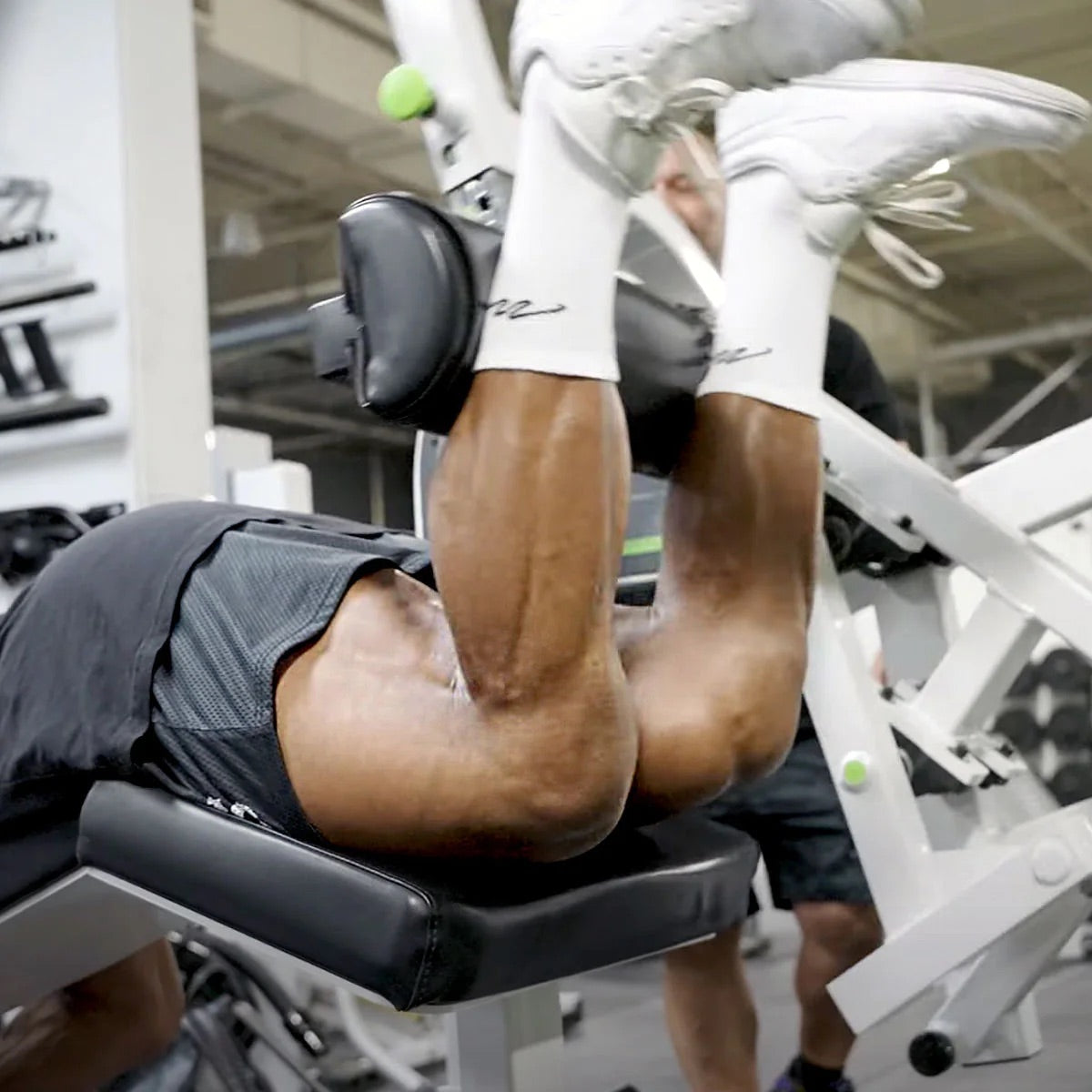
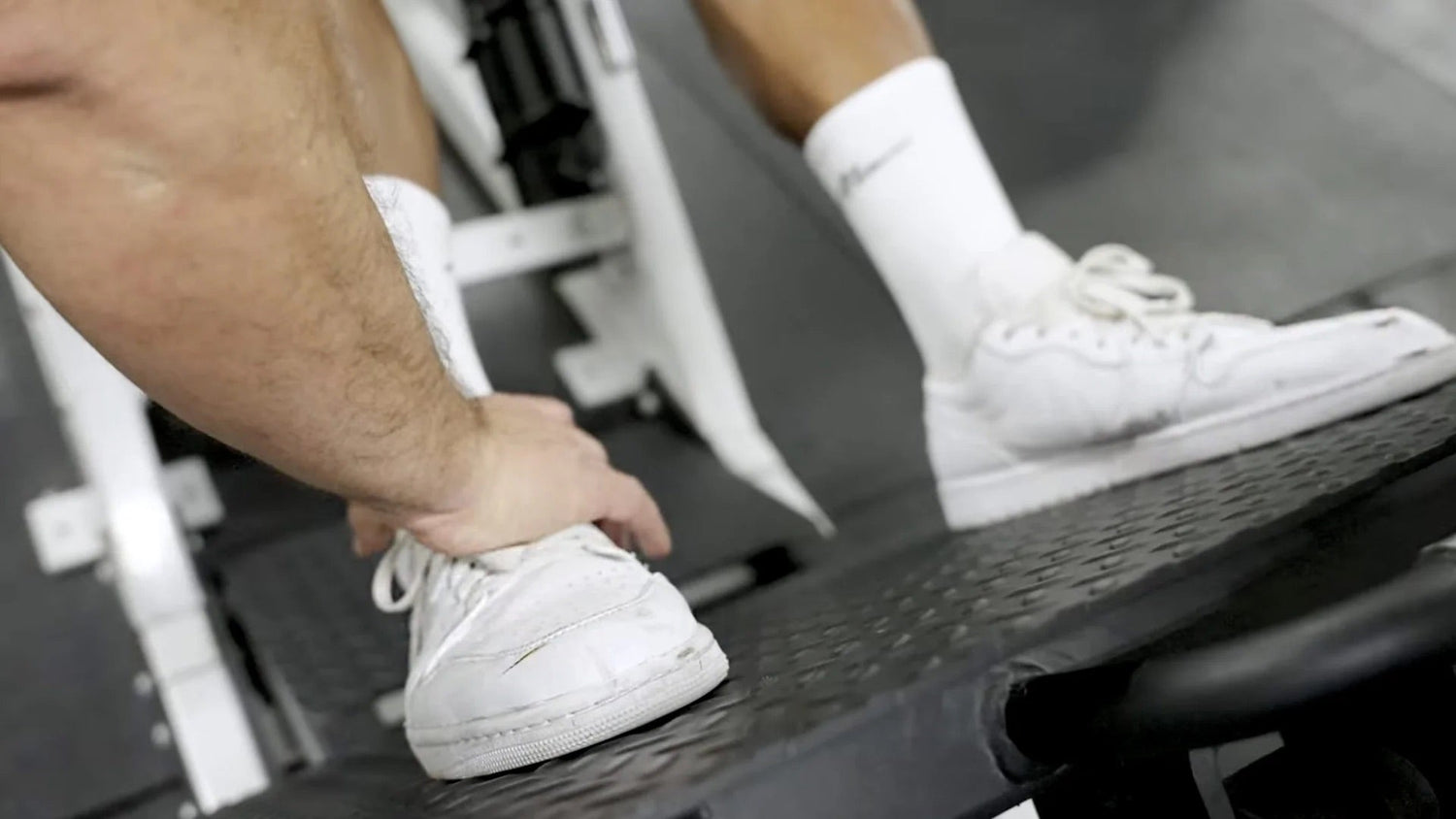
During the hack squat, it is critically important to strategically position your feet on the platform. Hany Rambod advises keeping your feet completely flat, so that the entire surface of your sole makes contact. A common biomechanical mistake is that the heels or ankles leave the platform as soon as you descend in the eccentric (negative) phase.
If your ankles come up, you unintentionally shift mechanical stress to the knee joints, which drastically increases the risk of acute overload. Does this happen to you? Then immediately adjust your foot position — possibly place your feet slightly higher or wider on the plate — until you can complete the full range of motion without your heels lifting. Keep your feet flat and stable to keep the kinetic chain closed.
Knees Over Toes for Maximum Power Transfer
Another physiological pitfall is the inward rolling of the feet and ankles during the push-off. When your feet tilt inward, your knees automatically fuse inward. This deviation immediately relieves tension from the quadriceps and creates an unsafe, lateral stress on the ligaments.
For maximum power transfer, your knees must move in a straight line over your toes. Rambod advises consciously applying force and pushing out through the outside of the foot. This optimally activates the outer muscle chains of the thighs and forces the knees into the correct, biomechanically strong position.
Pro Tip: Go Barefoot or Choose a Flat Sole
The less cushioning and 'padding' you have between your foot and the platform, the better. A thin one, A completely flat sole ensures you can physiologically feel the platform and guarantees stable anchoring.
Elite athletes often take this a step further. Top athlete Derek Lunsford prefers to take off his shoes completely during heavy leg days to train in socks or barefoot. He compares wearing thick shoes during a leg press or squat to wearing thick gloves during bench pressing: you lose the direct feel of the equipment. By training barefoot, feel exactly how the pressure is distributed across the sole of your foot. You stand more securely, presses more stably from the correct physiological angle and achieves a superior mind-muscle connection.
Evogen Support for Maximum Leg Day Intensity
A heavy, a biomechanically perfectly executed leg day demands the utmost from your central nervous system and muscle cells. To keep physiological intensity high and delay muscle fatigue, Hany Rambod applies the elite sports formulas of Evogen Nutrition:
- Neurological Drive Beforehand: Heavy compound lifts require absolute focus and stability. Take before your workout Evogen EVP Xtreme/3D to activate your central nervous system. Combine this with the liquid Evogen EVP AQ (liquid glycerol) to increase osmotic pressure in the bloodstream and push fluid deep into the working muscle cells for a brutal muscle pump and improved cell stability.
- Intra-Workout Muscle Protection: Training the largest muscle groups in your body causes acute metabolic stress. Drink during your sets Evogen Amino K.E.M. to continuously nourish your muscle cells with all 9 essential amino acids (EAAs). The added premium electrolyte matrix also ensures perfect hydration of the cell walls, which is essential to prevent muscle cramps during deep squats.
- Anabolic Recovery After the Session: As soon as the workout is over, the recovery process must start immediately. Feed your heavily stressed muscle tissue immediately after training with Evogen IsoJect. This ultra-pure whey isolate breaks down amino acids lightning-fast thanks to the patented IGNITOR™ enzyme technology, so that the nutrients are transported to the quadriceps and hamstrings without loss and without stomach discomfort.
Related Reading
- FST-7: How to Effectively Fix Muscle Imbalances in the Lower Body
- FST-7 Tips for Pendulum Squats and Biomechanical Depth
- The Anatomy of a Champion Core: 3 Ab Tips from Hany Rambod
Discover our collections
Ready to strengthen your foundation and tackle your leg training professionally? Discover our core collections at nutritionmonsters.com: